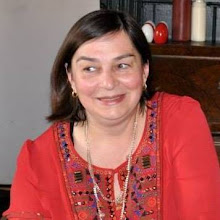
As a publisher supporting a charity at events and also with a competition offering publication of a short collection to the winner I’m very aware of the dangers if this is handled in the wrong way. Publishing can really help a charity – the Lumen/Camden Poetry Competition attracted more than 1,000 entries in its first year and raised more than £2,000 for the homeless in two North London Cold Weather Shelters.
Sales of the short collection we published for the winner (An Apple Tree Spouts Philosophy) are still adding to that figure, and the competition also helped launch the winner Caroline Squire as a poet who deserved to have a book out and to be noticed.
I was immediately approached by agencies wanting to manage this competition and publication for us, which draws attention to the fact that there’s money to be made from such ventures. Of course I didn’t accept these offers. None of the organisers of this competition take a penny in income, so there would be no commission for an agency.
The idea for the competition came from Ruth O’Callaghan, the poet who runs the twice-monthly Lumen and Camden Poetry Series of events, combining poetry performance by published poets with open mic from the audience and the chance to submit to her annual charity anthology. These events and anthology add about £4,000 more to the total raised for the homeless.
All of this raises a high percentage of the money needed to keep the Cold Weather Shelters going – the last time I heard it was 60% and I’m sure it’s still growing. So it’s a good thing when publishers support charities, isn’t it? Or are there mistakes that can be made?
An article in The Big Issue this week reminded me of the risks, and I’m more than aware of them already. In the article readers were warned about online sellers offering Christmas cards to support charities. Even the reputable shops selling greetings cards for charities typically give only 20-25% to the cause, perhaps less. At the most, a good retailer like WH Smith, might give 70%.
This is often used purely as a way of boosting sales, and a number of the online sellers pay a minimal 1% to the charities. So, supporting a charity can be part of a marketing drive, rather than a genuine effort to help.
As publishers, authors, and book buyers we need to be aware of this, and as competition entrants too. When we see that a competition, an anthology asking for submissions, or any book is being sold in aid of a charity, we need to know how much of the income is actually going to be handed over.
As a publisher I’m very aware that I could get this wrong, and the only way I can see of doing it is if we take absolutely nothing for Ward Wood Publishing and give all proceeds to the charity. Carol Ann Duffy takes no fee for judging the competition, and Ruth O’Callaghan also works with me at organising the entries and passing them on. Taking no income from charity work does simplify matters.
I do understand why publishers sometimes take a commission for this work and I don’t blame them for it. The work involved in organising and promoting the competition was pretty heavy. I was worn out by the time the deadline arrived. If you don’t keep promoting a competition you risk getting too few entries and we wanted to raise as much as possible for the charity.
The entries had to be accepted, entrants advised that their entry had been received if they paid and submitted via the website, and all entries passed to Ruth O’Callaghan who then organised it for Carol Ann Duffy. The number of entries as the deadline approached meant I was dealing with a huge amount of email.
But I’m not sure a commission based on a percentage of fees or sales is the right way to respond to this kind of workload. Generally, when publishers produce anthologies for charities, they might charge a 30% admin fee. I’m not sure how much agencies charge to organise this for a publisher. When we were organising the competition last year people told me I should be taking this fee.
I wouldn’t have felt happy about taking £600 from the £2,000 we raised, because I don’t think people entering a charity competition would be expecting that, so I didn’t want to take the standard 30% admin fee. People want their entry fees to go to the charity. I think people would accept specific costs being taken from the entry fee, such as printing and postage. We did calculate just over £100 for this as these are unavoidable costs and we arranged as low a fee with the printer as we could.
It’s better to detail these costs and explain clearly how much is to be taken out of the proceeds. A 30% admin fee could be very little, or it could be way too much in the case of a successful competition like ours. It wouldn’t cover the hours we have to spend working on it, but I’m not comfortable taking an income from any charity project.
Of course, this means we can’t do too many. We can probably only do one or two because the work has to be completely voluntary. But, in my opinion, this is the only way to go. People may disagree with me. It might be that it’s seen to be a good idea for publishers to make income from taking a percentage from charity publications, and agencies may also be welcome.
Charity anthologies do offer all the writers submitting a chance to get into print. They can supply some income for the publisher – perhaps a reasonable amount to cover the hours spent working. And they support the charities.
All opinions would be welcome on this subject. I’ve been careful about it since my first collection was accepted in the 1980s and I wanted to support the homeless in a Kilburn soup kitchen and hostel with a percentage of the sales income. The publisher advised me not to, as he said too many people did it and it could look like a marketing ploy to increase my sales.
Sunday, 4 December 2011


Friday, 2 December 2011
Occupy Books: A Naughty Suggestion
There’s a simple solution that can help us fight the way we’re going to have heavily marketed books thrust in our faces in bookshops and supermarkets all through the gift-giving season. It’s a bit naughty but could be a fun idea for the weekend. It’s the book-lover's silent but effective protest.
What you do is this. You go into the bookshop, careful not to look with distaste at the piles of books in prominent positions on the display tables. Just saunter along as you would usually and browse along a few shelves, picking out books at random and putting them back.
Then find a book you really admire and spend a little time with it. Wander along and select another. As you dilly dally along with your books, with that ‘Shall I buy?’ look on your face, choose an opportune moment and stick your favourite book on top of one of the piles on the best display table.
This works very well for novels and nonfiction. You might even want to put a cookbook with tasty recipes on top of Jamie Oliver’s barely edible inventions. Poetry is a bit more tricky.
If you can find the poetry books you like – in fact if you can find the poetry section at all (it will be very small and tucked away in a back corner or downstairs) you probably can’t get away with moving a book to the prime positions in the shop.
What you can do is take out the book you like best, read the blurb innocently, and put it back leaning against the others with its cover showing instead of spine only. It will look so nice like that. If you’re feeling very naughty you might find they have some special little stands tucked among the poetry books to display the usual suspects well and you can trump them with your selection.
Of course, you’re likely to find that the poetry collections you would most like to see displayed aren’t in the shop at all. Bookshops rarely take poetry, they dedicate a tiny set of shelves to it, and they’re unlikely even to take a good book sale or return. The shelves are crammed too tight already so they want to offload poetry whenever possible.
The only naughty answer to this is to follow the instructions in the Ann Drysdale poem ‘Between Dryden and Duffy’. Do Google it for the best methods – it’s one of the funniest comedy sonnets I’ve seen.
The poet in the poem looks along the shelf for her book, and when she doesn’t find it she clears that space between Dryden and Duffy and inserts one from her supermarket carrier bag. Of course, not all poet’s names fall into such a great position by happy accident.
So there are ways to get real books displayed. The prime display positions in the bookshops have been marked out and are all nicely prepared waiting for your choices. Something naughty to do at the weekend? I’m not going to admit if I’m already doing it.
What you do is this. You go into the bookshop, careful not to look with distaste at the piles of books in prominent positions on the display tables. Just saunter along as you would usually and browse along a few shelves, picking out books at random and putting them back.
Then find a book you really admire and spend a little time with it. Wander along and select another. As you dilly dally along with your books, with that ‘Shall I buy?’ look on your face, choose an opportune moment and stick your favourite book on top of one of the piles on the best display table.
This works very well for novels and nonfiction. You might even want to put a cookbook with tasty recipes on top of Jamie Oliver’s barely edible inventions. Poetry is a bit more tricky.
If you can find the poetry books you like – in fact if you can find the poetry section at all (it will be very small and tucked away in a back corner or downstairs) you probably can’t get away with moving a book to the prime positions in the shop.
What you can do is take out the book you like best, read the blurb innocently, and put it back leaning against the others with its cover showing instead of spine only. It will look so nice like that. If you’re feeling very naughty you might find they have some special little stands tucked among the poetry books to display the usual suspects well and you can trump them with your selection.
Of course, you’re likely to find that the poetry collections you would most like to see displayed aren’t in the shop at all. Bookshops rarely take poetry, they dedicate a tiny set of shelves to it, and they’re unlikely even to take a good book sale or return. The shelves are crammed too tight already so they want to offload poetry whenever possible.
The only naughty answer to this is to follow the instructions in the Ann Drysdale poem ‘Between Dryden and Duffy’. Do Google it for the best methods – it’s one of the funniest comedy sonnets I’ve seen.
The poet in the poem looks along the shelf for her book, and when she doesn’t find it she clears that space between Dryden and Duffy and inserts one from her supermarket carrier bag. Of course, not all poet’s names fall into such a great position by happy accident.
So there are ways to get real books displayed. The prime display positions in the bookshops have been marked out and are all nicely prepared waiting for your choices. Something naughty to do at the weekend? I’m not going to admit if I’m already doing it.
Thursday, 1 December 2011
Occupy Books. Celebrity Authors or Real Books?
OK, I know some celebrity authors can write and some of their books are good. But after yesterday’s post people complained at the way the market this season is dominated by highly publicised books that will probably never be read – not even by the ‘authors’ as so many are ghostwritten. These books are just bought as easy and lazy gifts at the last minute. I thought I’d add some statistics to this about how publishing and bookselling trends affect authors and what we can do about it.
I admit these statistics were gleaned from the One Show (a popular evening chat show on BBC One, if you’re not familiar with UK television). This made it more comical for me, because Gyles Brandreth revealed some figures about aspiring authors, rejection figures, and who gets published and paid for books. He did all of this with celebrity author Celia Imrie beside him, just about to plug her book.
Gyles answered the question many people ask me – which is ‘How many people can actually make a living out of writing books?’ I’ve always made my living out of writing as a journalist and nonfiction book author, as well as working in publishing as an editor and now a publisher. But they mean books of fiction or poetry.
He revealed that 95% of books submitted to publishers are rejected. Of the 5% that get accepted, 75% of the authors will earn less than £20,000 per year for their book (and most books only sell well in the first year). £20,000 might still sound reasonable, but really the vast majority of these authors will be doing well if they sell between 1,000-3,000 books per year. That’s the usual figure, and I’ve heard that even with a major publisher, the debut novel can be expected to sell about 500 copies.
So, about 5% of authors who submit to publishers will be accepted, and they are most likely going to sell fewer than 3,000 books. Even if they get royalties of 10% of the cover price and the book sells for £10, this would be less than £3,000 income. But most contracts with major publishers aren’t based on 10% of the cover price. All costs are taken off first and you get a percentage of the profit.
A while ago I posted about literary agents and the kind of advance they told me they go for. The agent I spoke to is very good and aims for a £25,000 advance for authors as her income comes purely from a percentage of what the author is paid by the publisher, if she succeeds in getting authors signed. This is standard – if you get an agent they manage your income by receiving it from the publisher, taking off their commission, and paying you.
But usually an advance is £5,000 or less. The book sales have to pay back the advance to the publisher before any additional income is paid, and you can see by the average sales figures that this is quite hard to achieve.
Gyles finished off by saying what happens to so many of the books that are published but don’t sell in large enough quantities. They are used in the construction of motorways and he said how many miles they were supporting, but sadly I can’t remember. Apparently they form a good, shock absorbent type of support.
I do hear people saying they think much of this is new, but I first worked as a fiction reviewer and an editor in the early 1980s and I was told even then about the massive quantities of books that were published only to be pulped. Authors are just becoming more aware of the facts nowadays, probably due to more information being available online.
At the end of his commentary, Gyles pointed out that publishers were more likely to take on authors who were already celebrities. They’re easier to sell. It was quite a comical introduction to Celia Imrie talking about her new book and her mouth was in a very uncomfortable attempt at a polite smile. I must confess, I've read some of her book and she's very good.
I’m not against celebrity authors, because publishers and bookshops say they provide enough finance for a lot of their other work. Celebrity authors could help support the publishing of less commercial books, and could also help publishers take a risk on authors.
Bookshops do have limits due to shelf space – a problem I’ve only realised to be significant over the past year. They can’t just take a risk on a book that’s good even if it’s sale or return. They always want sale or return, and they don’t have space.
The figures shouldn’t be depressing. When rejection slips come in, they need to be cast aside quickly and not be offputting. It’s hard to get published, and it’s even harder for those published books to sell in order to stay on a publisher’s list. We all keep writing anyway.
We shouldn’t see publishers as the judges of whether or not our writing is good, but we often do. We certainly shouldn’t judge by how much our book sells either, or all poets would stop writing.
All of this does mean that independent publishers and truly independent bookshops need to be supported if we want publishing outlets for debut novelists, poets, and risk-taking authors. The only way this can happen is if they’re supported by buyers.
Major publishers poach safe bet authors from each other – or so the literary agent told me – and they also poach from independent publishers. To keep opportunities open for authors I suggest looking at the good independent publishers and bookshops this season.
Sorry to repeat this bit, but I’m not saying this to promote my company or any specific company. In fact suggestions for good listings of independents and good review sites would be welcome.
I admit these statistics were gleaned from the One Show (a popular evening chat show on BBC One, if you’re not familiar with UK television). This made it more comical for me, because Gyles Brandreth revealed some figures about aspiring authors, rejection figures, and who gets published and paid for books. He did all of this with celebrity author Celia Imrie beside him, just about to plug her book.
Gyles answered the question many people ask me – which is ‘How many people can actually make a living out of writing books?’ I’ve always made my living out of writing as a journalist and nonfiction book author, as well as working in publishing as an editor and now a publisher. But they mean books of fiction or poetry.
He revealed that 95% of books submitted to publishers are rejected. Of the 5% that get accepted, 75% of the authors will earn less than £20,000 per year for their book (and most books only sell well in the first year). £20,000 might still sound reasonable, but really the vast majority of these authors will be doing well if they sell between 1,000-3,000 books per year. That’s the usual figure, and I’ve heard that even with a major publisher, the debut novel can be expected to sell about 500 copies.
So, about 5% of authors who submit to publishers will be accepted, and they are most likely going to sell fewer than 3,000 books. Even if they get royalties of 10% of the cover price and the book sells for £10, this would be less than £3,000 income. But most contracts with major publishers aren’t based on 10% of the cover price. All costs are taken off first and you get a percentage of the profit.
A while ago I posted about literary agents and the kind of advance they told me they go for. The agent I spoke to is very good and aims for a £25,000 advance for authors as her income comes purely from a percentage of what the author is paid by the publisher, if she succeeds in getting authors signed. This is standard – if you get an agent they manage your income by receiving it from the publisher, taking off their commission, and paying you.
But usually an advance is £5,000 or less. The book sales have to pay back the advance to the publisher before any additional income is paid, and you can see by the average sales figures that this is quite hard to achieve.
Gyles finished off by saying what happens to so many of the books that are published but don’t sell in large enough quantities. They are used in the construction of motorways and he said how many miles they were supporting, but sadly I can’t remember. Apparently they form a good, shock absorbent type of support.
I do hear people saying they think much of this is new, but I first worked as a fiction reviewer and an editor in the early 1980s and I was told even then about the massive quantities of books that were published only to be pulped. Authors are just becoming more aware of the facts nowadays, probably due to more information being available online.
At the end of his commentary, Gyles pointed out that publishers were more likely to take on authors who were already celebrities. They’re easier to sell. It was quite a comical introduction to Celia Imrie talking about her new book and her mouth was in a very uncomfortable attempt at a polite smile. I must confess, I've read some of her book and she's very good.
I’m not against celebrity authors, because publishers and bookshops say they provide enough finance for a lot of their other work. Celebrity authors could help support the publishing of less commercial books, and could also help publishers take a risk on authors.
Bookshops do have limits due to shelf space – a problem I’ve only realised to be significant over the past year. They can’t just take a risk on a book that’s good even if it’s sale or return. They always want sale or return, and they don’t have space.
The figures shouldn’t be depressing. When rejection slips come in, they need to be cast aside quickly and not be offputting. It’s hard to get published, and it’s even harder for those published books to sell in order to stay on a publisher’s list. We all keep writing anyway.
We shouldn’t see publishers as the judges of whether or not our writing is good, but we often do. We certainly shouldn’t judge by how much our book sells either, or all poets would stop writing.
All of this does mean that independent publishers and truly independent bookshops need to be supported if we want publishing outlets for debut novelists, poets, and risk-taking authors. The only way this can happen is if they’re supported by buyers.
Major publishers poach safe bet authors from each other – or so the literary agent told me – and they also poach from independent publishers. To keep opportunities open for authors I suggest looking at the good independent publishers and bookshops this season.
Sorry to repeat this bit, but I’m not saying this to promote my company or any specific company. In fact suggestions for good listings of independents and good review sites would be welcome.
Wednesday, 30 November 2011
Occupy Books. Do We Want Our Books on Prescription?
This week I found out that a high street bookseller who always stocks our latest books can’t take any books released by us this season. They want to stock the books and have asked me to come back after Christmas, when they will be able to stock them.
This was a bit of a shock, because of course this is one of them main times of the year when people will be looking for books as gifts. The manager liked our books – she wanted our books – but she told me that at the moment ‘It’s all prescribed’.
I looked into this and found out that major publishers pay to have their books stocked at Christmas, and the evasive word for this is that the books have been ‘prescribed’. Even publishers who normally get their books stocked will be turned at the door until this favourable time for bookselling has passed.
So, if you go into the main bookshops for your gifts, you’ll be getting them on prescription. The major publishers have paid to have certain books not only thrust in your face, but also to have other books kept out of stock until January.
We all know this happens to a certain extent all year – that the books on the best display tables have been paid for, and that the others only have their spines showing on shelves.
But I didn’t realise books that the shop managers would like to stock are turned away completely over Christmas because they haven’t been ‘prescribed’ with a hefty payment from the publisher.
This doesn’t just include books from smaller presses. It includes books in the mid-list from major publishers. The publishers decide which books we should be offered based on what they think can sell in large numbers, and they publicise those books in a number of ways to make sure people want them.
We know which books those are. Their celebrity authors have been appearing on TV chat shows recently. No doubt there will also be some good novels, but what there won’t be is a good range of choice and books stocked according to what the bookshop manager and buyers select on merit.
It’s always hard for me to get poetry books into these main bookshops, but they will support local poets so long as we have all our books in their centralised system, and we do. They do support all of our novels by stocking them, and also the Bedford Square 5 anthology. Just not while the books are stocked on prescription.
I’m not saying this in order to say ‘Buy my book’ or ‘Buy from my publishing company’ and I wouldn’t want Occupy Books to be a protest that’s exploited purely for marketing.
The only way to show how we feel about what one person called ‘corruption in publishing and bookselling’ when he explained prescription to me, is not to support the shops doing this and to look for books in a different way.
If you want to answer this post with suggestions, please don’t point to your own publishing company or book. Perhaps show good review sites about books from independent presses. Perhaps take a look on the websites of a number of independent publishing companies and buy direct from the publisher.
Or contact some of your favourite authors on Facebook and ask to buy signed copies direct from them. We can also ‘buy local’ and ‘buy direct’ for our books, if we don’t want them on prescription.
This was a bit of a shock, because of course this is one of them main times of the year when people will be looking for books as gifts. The manager liked our books – she wanted our books – but she told me that at the moment ‘It’s all prescribed’.
I looked into this and found out that major publishers pay to have their books stocked at Christmas, and the evasive word for this is that the books have been ‘prescribed’. Even publishers who normally get their books stocked will be turned at the door until this favourable time for bookselling has passed.
So, if you go into the main bookshops for your gifts, you’ll be getting them on prescription. The major publishers have paid to have certain books not only thrust in your face, but also to have other books kept out of stock until January.
We all know this happens to a certain extent all year – that the books on the best display tables have been paid for, and that the others only have their spines showing on shelves.
But I didn’t realise books that the shop managers would like to stock are turned away completely over Christmas because they haven’t been ‘prescribed’ with a hefty payment from the publisher.
This doesn’t just include books from smaller presses. It includes books in the mid-list from major publishers. The publishers decide which books we should be offered based on what they think can sell in large numbers, and they publicise those books in a number of ways to make sure people want them.
We know which books those are. Their celebrity authors have been appearing on TV chat shows recently. No doubt there will also be some good novels, but what there won’t be is a good range of choice and books stocked according to what the bookshop manager and buyers select on merit.
It’s always hard for me to get poetry books into these main bookshops, but they will support local poets so long as we have all our books in their centralised system, and we do. They do support all of our novels by stocking them, and also the Bedford Square 5 anthology. Just not while the books are stocked on prescription.
I’m not saying this in order to say ‘Buy my book’ or ‘Buy from my publishing company’ and I wouldn’t want Occupy Books to be a protest that’s exploited purely for marketing.
The only way to show how we feel about what one person called ‘corruption in publishing and bookselling’ when he explained prescription to me, is not to support the shops doing this and to look for books in a different way.
If you want to answer this post with suggestions, please don’t point to your own publishing company or book. Perhaps show good review sites about books from independent presses. Perhaps take a look on the websites of a number of independent publishing companies and buy direct from the publisher.
Or contact some of your favourite authors on Facebook and ask to buy signed copies direct from them. We can also ‘buy local’ and ‘buy direct’ for our books, if we don’t want them on prescription.
Tuesday, 22 November 2011
Fancy a Sing-Song?
I finally took the plunge and joined Rock Choir today, and I must say it felt pretty nerve-wracking going along to the first taster session. Singing is something I’ve always loved, but I’m not sure people have always loved my singing. At school I was first to dash enthusiastically to ask to join any choirs and I’d sing my heart out in the front line – where I was put due to my tiny height as a child rather than any special skills.
My mother was always quick to point out every error after performances, but that didn’t stop me until teenage years made me that bit more easily embarrassed. Having my own children and taking them to music school for years got me singing again. I’m aware of my limitations though. I’m only any good in the mid-range and definitely can’t reach those high notes.
One of my friends at the Camden Poetry Series of open mics told me about Rock Choir last year. He hadn’t been coming to the poetry events for a while then turned up looking ten years younger and full of joie de vivre. He had recently married his gay partner, who also looked pretty pleased with himself, and I thought it was due to their honeymoon period. But no – he told me it was all down to his new passion for singing.
I looked up Rock Choir on YouTube and saw him singing in his local choir. There are Rock Choirs in many towns, and three in my local area, so I’m very lucky. There’s something about the whole Rock Choir idea that’s making it take off in a big way.
The final factor in making me join was that I realised I wanted one of the characters in my novel to join Rock Choir. Her teenage daughter is discovering a new form of youth feminism, and she herself needs to feel a bit more free. The theme of feminism is treated with comedy which has an underlying seriousness, and the ‘learning to sing’ theme is a tribute and echo of Erica Yong’s iconic ‘Fear of Flying’.
So I needed to do a bit of research by getting some Rock Choir experience myself. I’m so glad I did. There are morning, early and late evening choirs in my area, but I chose the morning one in Hampstead as I like to spend dinner-time with my two sons. People look at me a bit confused when I say early and late evening outings clash with ‘family dinner-time’. Is it really such a bygone idea? I do go out on Fridays to the open mics I either organise or help with, and I think that’s enough. We have a pizza or takeaway on those days.
But I was a bit worried in case the morning sessions had poor attendance – and was pleasantly surprised to find a lively group there. Rock Choir Hampstead is in the lovely Quaker Meeting House on Heath Street. It’s a building I’ve always wanted to look inside. The atmosphere is lovely with a view out and down the hill over Hampstead rooftops.
More importantly it was incredibly friendly. The sign-up online worried me as it said my free taster session wouldn’t guarantee me a place in a choir, although I could try out a number of choirs before choosing. What did this mean? Could I be turned down? Would I have to audition? Might my voice go all ‘pitchy’ with nerves, as they say on X Factor?
A friendly follow-up email reassured me. It told me I wouldn’t have to audition and that the session was for me to decide if Rock Choir was for me rather than vice versa. I was also told that somebody would be there to greet me, which she did, and she also seated me with somebody for the session.
We also get put into a section that suits our voices. I can’t hit the high notes so I was put in the lower alto group, and I was told I could move about if my voice wasn’t comfortable in that range. Each song gets taught by the teacher at the front, who has a keyboard and also a backing track. The teacher was highly skilled and could sing from bass to soprano, giving each of us an example of how to sing our parts.
Sometimes people think they can’t sing because at school we’ve had to try to hit the full range of notes. I was at an all girls’ school and the majority of the girls sang so high I really thought I was incapable. I just can’t get up there with my voice, but I can sing bass and lower alto. It was so lovely to be taught songs in a way that let me harmonise easily.
It does feel like being part of a professional choir, and the teaching is also professional but friendly. In fact the friendliness of the whole choir was more than I expected. Next week is the last of this term and we’re all going to have coffee together after the session. The group didn’t make me feel self-conscious as a newcomer, and most of them wanted to come and chat a little. I’ll be going along to Hampstead on Sunday to see them performing the songs they’ve perfected as the Christmas lights go on.
The morning session is much more popular with women, although there was one very happy looking man. I know the early and late evening sessions in my area attract even more people (there were about twenty at mine so there must be quite a large crowd at the others) and there are more people who work outside the home plus more men. So I’m sure everybody can find a choir to suit them – if you’re tempted.
I did sing along today although I didn’t know exactly what I was doing, and I’ll leave the dance steps until I feel I can co-ordinate myself when singing. They aren’t hard dance steps and more of a swingalong as you singalong. If you take a look on YouTube you’ll see. I think I’ll position myself at the back in any performances.
Joining was a good decision. I’m going to download the songs online and get myself ready for next week when we’re also starting to learn a new song. Today’s songs were Something Inside So Strong, Ain’t No Mountain High Enough, Valerie, Build Me Up Buttercup, and Anytime You Need a Friend. They say the songs are Motown, Pop and Gospel, and normally you get a number of sessions to learn each song.
My mother was always quick to point out every error after performances, but that didn’t stop me until teenage years made me that bit more easily embarrassed. Having my own children and taking them to music school for years got me singing again. I’m aware of my limitations though. I’m only any good in the mid-range and definitely can’t reach those high notes.
One of my friends at the Camden Poetry Series of open mics told me about Rock Choir last year. He hadn’t been coming to the poetry events for a while then turned up looking ten years younger and full of joie de vivre. He had recently married his gay partner, who also looked pretty pleased with himself, and I thought it was due to their honeymoon period. But no – he told me it was all down to his new passion for singing.
I looked up Rock Choir on YouTube and saw him singing in his local choir. There are Rock Choirs in many towns, and three in my local area, so I’m very lucky. There’s something about the whole Rock Choir idea that’s making it take off in a big way.
The final factor in making me join was that I realised I wanted one of the characters in my novel to join Rock Choir. Her teenage daughter is discovering a new form of youth feminism, and she herself needs to feel a bit more free. The theme of feminism is treated with comedy which has an underlying seriousness, and the ‘learning to sing’ theme is a tribute and echo of Erica Yong’s iconic ‘Fear of Flying’.
So I needed to do a bit of research by getting some Rock Choir experience myself. I’m so glad I did. There are morning, early and late evening choirs in my area, but I chose the morning one in Hampstead as I like to spend dinner-time with my two sons. People look at me a bit confused when I say early and late evening outings clash with ‘family dinner-time’. Is it really such a bygone idea? I do go out on Fridays to the open mics I either organise or help with, and I think that’s enough. We have a pizza or takeaway on those days.
But I was a bit worried in case the morning sessions had poor attendance – and was pleasantly surprised to find a lively group there. Rock Choir Hampstead is in the lovely Quaker Meeting House on Heath Street. It’s a building I’ve always wanted to look inside. The atmosphere is lovely with a view out and down the hill over Hampstead rooftops.
More importantly it was incredibly friendly. The sign-up online worried me as it said my free taster session wouldn’t guarantee me a place in a choir, although I could try out a number of choirs before choosing. What did this mean? Could I be turned down? Would I have to audition? Might my voice go all ‘pitchy’ with nerves, as they say on X Factor?
A friendly follow-up email reassured me. It told me I wouldn’t have to audition and that the session was for me to decide if Rock Choir was for me rather than vice versa. I was also told that somebody would be there to greet me, which she did, and she also seated me with somebody for the session.
We also get put into a section that suits our voices. I can’t hit the high notes so I was put in the lower alto group, and I was told I could move about if my voice wasn’t comfortable in that range. Each song gets taught by the teacher at the front, who has a keyboard and also a backing track. The teacher was highly skilled and could sing from bass to soprano, giving each of us an example of how to sing our parts.
Sometimes people think they can’t sing because at school we’ve had to try to hit the full range of notes. I was at an all girls’ school and the majority of the girls sang so high I really thought I was incapable. I just can’t get up there with my voice, but I can sing bass and lower alto. It was so lovely to be taught songs in a way that let me harmonise easily.
It does feel like being part of a professional choir, and the teaching is also professional but friendly. In fact the friendliness of the whole choir was more than I expected. Next week is the last of this term and we’re all going to have coffee together after the session. The group didn’t make me feel self-conscious as a newcomer, and most of them wanted to come and chat a little. I’ll be going along to Hampstead on Sunday to see them performing the songs they’ve perfected as the Christmas lights go on.
The morning session is much more popular with women, although there was one very happy looking man. I know the early and late evening sessions in my area attract even more people (there were about twenty at mine so there must be quite a large crowd at the others) and there are more people who work outside the home plus more men. So I’m sure everybody can find a choir to suit them – if you’re tempted.
I did sing along today although I didn’t know exactly what I was doing, and I’ll leave the dance steps until I feel I can co-ordinate myself when singing. They aren’t hard dance steps and more of a swingalong as you singalong. If you take a look on YouTube you’ll see. I think I’ll position myself at the back in any performances.
Joining was a good decision. I’m going to download the songs online and get myself ready for next week when we’re also starting to learn a new song. Today’s songs were Something Inside So Strong, Ain’t No Mountain High Enough, Valerie, Build Me Up Buttercup, and Anytime You Need a Friend. They say the songs are Motown, Pop and Gospel, and normally you get a number of sessions to learn each song.
Monday, 31 October 2011
Dear Publisher: Is it worth investing in an author website?
My feeling is that a blog is more useful to authors than a website. It's also a good idea to set a day of the week when you commit to writing a blog post so that it's regular.
With a blog you can post a link on Facebook and other places, and people can interact with you. Seeing how you write on the blog also gives them an indication about whether or not they might like your writing style and empathise with your ideas.
You shouldn't be put off blogging if you don't see many people following your blog, because they might read it but not follow, and I know I have people who follow anonymously. You will also find they probably mainly answer your blog posts on Facebook when you post the link from there. So you might not get many comments on your blog, and that doesn't matter.
A website is a much more static affair. It has information and people will go for that, but you can find it's harder to get traffic to a website because it isn't updating as much as a blog. They will also only follow a link to a blog if you've written something that intrigues them, so it's not just about updating regularly.
With a website the information tends to be about the author, and there are so many authors out there trying to ask people to look at their websites and examples of their writing. So you have to tempt them in via a blog. They might then follow the link to your website.
All of these things work together - Facebook and other social networks, a blog, your website and your publisher's website. They should all be interlinked so people get interested by something you say and then follow the links.
We put a detailed author page on our Ward Wood website too, which also links to the author blogs, Facebook and Twitter pages, and websites. Plus we link to any videos and examples of work, and the book sales of course.
I'm not sure how worthwhile it is to invest in a website if you mean you intend to pay a designer. As authors we are constantly being approached by people who want to be hired for this work.
I've never had an author website myself as it has always felt like just one more place to try to attract traffic and the advice I've usually been given is to try to keep everything in one place online if it's possible. It isn't possible so I just try to narrow down the number of places people need to look for my information.
For the same reason I haven't set up book pages or a fan page on Facebook as I try to keep everything in one place - although I need a separate group page for Ward Wood and also for one of the Lumen and Camden Poetry series of events I help with (groups are needed to send invitations).
People who ask to be hired to work on author publicity tend to spend time setting up an author page on Facebook and book fan pages but I'm still to be convinced they actually help. I'm not always convinced hired publicists understand the best use of Facebook for authors.
I'm a fan of Kazuo Ishiguro on Facebook as he's too famous to be able to be on there personally, but I'm not sure fan pages for all authors serve a purpose. People want to follow us on one page - our main page I think.
Of course if you do have a website it will say as much about you as the cover design of your books. Will it be minimalist, with a pared down design that tells the world you're a literary writer? Will it be glossy and full of frills and show you're a commercial writer? Are you a bestselling author with readers who will expect an expensive looking design, or a poet whose readers really don't expect that? Or are you aspiring to be a bestselling author so it helps to look like one? Once you start getting into website design all sorts of factors have to be taken into account.
Readers don't have the same expectations about a blog - they want to see what you have to say, and if you're good at illustrating with artwork and photos then all the better. You need to ask yourself if you need a professionally designed website to reflect who you are as a writer, or is it enough to create what you need using Wordpress?
I don't think a website can hurt unless the design puts you in a category of writing you don't want to be involved in, and neither can a fan page or book page on Facebook - so long as we don't keep asking people to look at them as that just sounds like such a huge number of authors saying 'look at me and my writing' rather than 'I have this post on my blog which might be of interest to you.' It doesn't have to be about books and publishing. You may have something unique about your lifestyle and you can let us into it.
It can feel and look narcissistic to ask people just to come and look at us and our work. To have interaction with people online we have to genuinely be offering something they want and need, and we can do that with a blog. Of course, I also think we're offering something they want and need when we offer our books, but they'll decide for themselves which authors and publishers they like enough and they will buy their books.
With a blog you can post a link on Facebook and other places, and people can interact with you. Seeing how you write on the blog also gives them an indication about whether or not they might like your writing style and empathise with your ideas.
You shouldn't be put off blogging if you don't see many people following your blog, because they might read it but not follow, and I know I have people who follow anonymously. You will also find they probably mainly answer your blog posts on Facebook when you post the link from there. So you might not get many comments on your blog, and that doesn't matter.
A website is a much more static affair. It has information and people will go for that, but you can find it's harder to get traffic to a website because it isn't updating as much as a blog. They will also only follow a link to a blog if you've written something that intrigues them, so it's not just about updating regularly.
With a website the information tends to be about the author, and there are so many authors out there trying to ask people to look at their websites and examples of their writing. So you have to tempt them in via a blog. They might then follow the link to your website.
All of these things work together - Facebook and other social networks, a blog, your website and your publisher's website. They should all be interlinked so people get interested by something you say and then follow the links.
We put a detailed author page on our Ward Wood website too, which also links to the author blogs, Facebook and Twitter pages, and websites. Plus we link to any videos and examples of work, and the book sales of course.
I'm not sure how worthwhile it is to invest in a website if you mean you intend to pay a designer. As authors we are constantly being approached by people who want to be hired for this work.
I've never had an author website myself as it has always felt like just one more place to try to attract traffic and the advice I've usually been given is to try to keep everything in one place online if it's possible. It isn't possible so I just try to narrow down the number of places people need to look for my information.
For the same reason I haven't set up book pages or a fan page on Facebook as I try to keep everything in one place - although I need a separate group page for Ward Wood and also for one of the Lumen and Camden Poetry series of events I help with (groups are needed to send invitations).
People who ask to be hired to work on author publicity tend to spend time setting up an author page on Facebook and book fan pages but I'm still to be convinced they actually help. I'm not always convinced hired publicists understand the best use of Facebook for authors.
I'm a fan of Kazuo Ishiguro on Facebook as he's too famous to be able to be on there personally, but I'm not sure fan pages for all authors serve a purpose. People want to follow us on one page - our main page I think.
Of course if you do have a website it will say as much about you as the cover design of your books. Will it be minimalist, with a pared down design that tells the world you're a literary writer? Will it be glossy and full of frills and show you're a commercial writer? Are you a bestselling author with readers who will expect an expensive looking design, or a poet whose readers really don't expect that? Or are you aspiring to be a bestselling author so it helps to look like one? Once you start getting into website design all sorts of factors have to be taken into account.
Readers don't have the same expectations about a blog - they want to see what you have to say, and if you're good at illustrating with artwork and photos then all the better. You need to ask yourself if you need a professionally designed website to reflect who you are as a writer, or is it enough to create what you need using Wordpress?
I don't think a website can hurt unless the design puts you in a category of writing you don't want to be involved in, and neither can a fan page or book page on Facebook - so long as we don't keep asking people to look at them as that just sounds like such a huge number of authors saying 'look at me and my writing' rather than 'I have this post on my blog which might be of interest to you.' It doesn't have to be about books and publishing. You may have something unique about your lifestyle and you can let us into it.
It can feel and look narcissistic to ask people just to come and look at us and our work. To have interaction with people online we have to genuinely be offering something they want and need, and we can do that with a blog. Of course, I also think we're offering something they want and need when we offer our books, but they'll decide for themselves which authors and publishers they like enough and they will buy their books.
Sunday, 30 October 2011
Dear Publisher: My Present Publisher Isn’t Selling Enough of My Books
There are some questions I get asked so regularly as a publisher that I’ve decided it’s best to answer them on my blog so I can point the enquirers to the answers, and also I think these must be the questions in many people’s minds.
Published authors from large and small publishing houses ask me why their books aren’t selling well enough – although the question is always framed to put the blame with their publisher.
What they want is to move to a publishing company they can see puts effort into promotional activities and also actively approaches bookshops to try to get authors on to their shelves.
These authors will often say their sales figures stick at about 100 books and they ask me if they should change publisher seeing as that figure isn’t high enough.
The answer depends on what exactly has been done by both the publisher and the author and why the figure has stuck at this level. Sales figures for poetry are known to be low, but authors can be surprised at how low the sales figures can be for a debut novel, even with a major publisher.
A literary agent and a literary publicist told me a debut novel with a major publisher may typically sell about 500 copies. Hopefully with subsequent novels that figure should grow, or the publishing house may need to end the contract. An independent press would keep an author on their list with sales at this level.
Authors can think that their publisher isn’t repping the books to shops if they don’t see them on the shelves, and they may think the publisher hasn’t promoted enough if the books don’t sell. But publishers often do a lot of this work without giving the authors details, particularly when submitting books for prizes as it could cause bad feeling among the authors if it’s known who was and who wasn’t put forward for an award.
The first thing an author may know from a major publisher could be that they have been shortlisted. Should publishers keep authors more informed? Or might it be more disappointing to know how much work is done if the results are not too good? I keep our authors well informed about everything we do. But I wonder if, for authors in general, it can be nice not to know the massive promotional effort publishers put in so that the publisher can be blamed for low sales.
The main publishers do also have a whole process for preparing Advance Information sheets and sending reps round to bookshops to show them what’s on offer (you can see examples of AI sheets on each author page on our website - they all have AI sheet links). The bookshops turn down most of the books repped to them. It’s incredibly hard even for a major publisher to get books into shops, where customers are likely to go in looking for the main names and titles.
But managers are likely to take books by authors who have a connection to the local area, and the automated system for ordering means you can just show them your book and they can click and order it at their till. I know I’m repeating this, but it’s less daunting than you think to take your book into bookshops and talk to the buyer. I’ve never been turned down yet if there’s a reason why a book is relevant to the shop I’m approaching.
If a book sells that first hundred then the publisher has launched and promoted it, but the publicity department will stop after a while and move on to the new season’s offerings. They will also be asked to focus on the books that seem to have most chance of taking off. So it does become the author’s task to focus on keeping the sales momentum going. At this point, authors write to me to say their publisher isn’t organising enough events for them. I’ve heard this about both large and small publishing companies.
It surprises me that so many authors feel this is something they should wait at home for until the publishers arrange events and send them the bookings. As an author I had always assumed this was my task, and it is down to authors to keep themselves as actively involved with events, book groups, talks, literary festivals and so on as they can.
A publisher will help out with this. I do contact the literary festivals and will try to get bookings for our authors. But as an individual author it’s likely you’ll do much better by contacting directly – if the publisher phones event organisers and festivals they will get bookings for the authors on the list who catch the eye of the bookings manager and that might not be you.
At Ward Wood we do hold very regular events both for our authors and for authors from other publishers for mutual support, and this does help out as it can be difficult and expensive for authors to get bookings and venues in London. The promotion around an event also helps an author’s name get known. I heard this week that one of the main independent presses (with books in many bookshops) gets 90% of all sales at events, so this shows how important they are.
Even if sales are low at events – and bookselling is hard anywhere – getting articles about each event into local newspapers and on listings sites does get your name seen regularly so that people know that you and your book exist.
I’ve concentrated on fiction in this piece because poetry has its own particular difficulties but as it has always been hard to sell there are also ways to help your book along. I’ll write about poetry soon in another post. However, many of these points are equally true of poetry.
One main difference is that poetry mainly sells at events with few sales from other sources, and sales at events aren't high either, so the effort is much greater. For those with stage fright it is possible to get involved in other ways, perhaps organising events for others (which I like to do)or a very good blog could help.
The fact is that, no matter how great the promotional effort from a poetry press, the sales figures will be in the low hundreds and about 90% of all books sold will be at events. There's no strong reason to move from one poetry press to another as you will be responsible for this 90% of sales no matter which publisher you choose. However, if you have other reasons for leaving a poetry press then it's a good idea to be with one known for good promotion because your name will be more widely seen. It's not just about sales, but also about building a reputation.
The brief answer to people who approach me saying their publisher has only sold 100 copies of their book, hasn’t got it into bookshops and doesn’t arrange events for them, is simple. As this usually comes with an approach to me as a potential publisher the fact is that the sales figure worries me, and not because the other publisher might be to blame.
I would be worried that the author hasn’t found ways to approach bookshops, to organise events, to create a popular blog, to build a Facebook following, to answer posts on high traffic websites (they let you link your name back to your own website which really helps), to do every single thing that helps a novel make that leap from being in the lower hundreds to 500 or more.
And maybe with enough effort a novel could make that magic leap and really take off. But not if the author is saying ‘Why isn’t somebody doing this for me?’ I work extremely hard to promote our authors and to rep their books to shops and organise events. I expect authors to work just as hard at it because it’s a collaboration.
Some authors are lucky and a debut novel is the one a major publishing company puts a massive promotional effort into and it takes off. Everything is done for the novelist. But for most of us getting up above the lower hundreds in sales takes a phenomenal effort and getting published is only the first hurdle. Getting the book to sell is the hardest part – harder even than writing the book, which we all know is extremely difficult.
I’ve been impressed by the mid-list authors from major publishers who have approached me when moving down to an independent seeing as their sales figures don’t reach the high targets expected. They have a real focus on approaching bookshops and giving events, and getting into the press and media.
I know it sounds like hard work and impossible, but writing a book feels like that too, and so does attracting a publisher. We can try to increase our sales figures with the same determination we put into the other tasks needed to be an author.
Published authors from large and small publishing houses ask me why their books aren’t selling well enough – although the question is always framed to put the blame with their publisher.
What they want is to move to a publishing company they can see puts effort into promotional activities and also actively approaches bookshops to try to get authors on to their shelves.
These authors will often say their sales figures stick at about 100 books and they ask me if they should change publisher seeing as that figure isn’t high enough.
The answer depends on what exactly has been done by both the publisher and the author and why the figure has stuck at this level. Sales figures for poetry are known to be low, but authors can be surprised at how low the sales figures can be for a debut novel, even with a major publisher.
A literary agent and a literary publicist told me a debut novel with a major publisher may typically sell about 500 copies. Hopefully with subsequent novels that figure should grow, or the publishing house may need to end the contract. An independent press would keep an author on their list with sales at this level.
Authors can think that their publisher isn’t repping the books to shops if they don’t see them on the shelves, and they may think the publisher hasn’t promoted enough if the books don’t sell. But publishers often do a lot of this work without giving the authors details, particularly when submitting books for prizes as it could cause bad feeling among the authors if it’s known who was and who wasn’t put forward for an award.
The first thing an author may know from a major publisher could be that they have been shortlisted. Should publishers keep authors more informed? Or might it be more disappointing to know how much work is done if the results are not too good? I keep our authors well informed about everything we do. But I wonder if, for authors in general, it can be nice not to know the massive promotional effort publishers put in so that the publisher can be blamed for low sales.
The main publishers do also have a whole process for preparing Advance Information sheets and sending reps round to bookshops to show them what’s on offer (you can see examples of AI sheets on each author page on our website - they all have AI sheet links). The bookshops turn down most of the books repped to them. It’s incredibly hard even for a major publisher to get books into shops, where customers are likely to go in looking for the main names and titles.
But managers are likely to take books by authors who have a connection to the local area, and the automated system for ordering means you can just show them your book and they can click and order it at their till. I know I’m repeating this, but it’s less daunting than you think to take your book into bookshops and talk to the buyer. I’ve never been turned down yet if there’s a reason why a book is relevant to the shop I’m approaching.
If a book sells that first hundred then the publisher has launched and promoted it, but the publicity department will stop after a while and move on to the new season’s offerings. They will also be asked to focus on the books that seem to have most chance of taking off. So it does become the author’s task to focus on keeping the sales momentum going. At this point, authors write to me to say their publisher isn’t organising enough events for them. I’ve heard this about both large and small publishing companies.
It surprises me that so many authors feel this is something they should wait at home for until the publishers arrange events and send them the bookings. As an author I had always assumed this was my task, and it is down to authors to keep themselves as actively involved with events, book groups, talks, literary festivals and so on as they can.
A publisher will help out with this. I do contact the literary festivals and will try to get bookings for our authors. But as an individual author it’s likely you’ll do much better by contacting directly – if the publisher phones event organisers and festivals they will get bookings for the authors on the list who catch the eye of the bookings manager and that might not be you.
At Ward Wood we do hold very regular events both for our authors and for authors from other publishers for mutual support, and this does help out as it can be difficult and expensive for authors to get bookings and venues in London. The promotion around an event also helps an author’s name get known. I heard this week that one of the main independent presses (with books in many bookshops) gets 90% of all sales at events, so this shows how important they are.
Even if sales are low at events – and bookselling is hard anywhere – getting articles about each event into local newspapers and on listings sites does get your name seen regularly so that people know that you and your book exist.
I’ve concentrated on fiction in this piece because poetry has its own particular difficulties but as it has always been hard to sell there are also ways to help your book along. I’ll write about poetry soon in another post. However, many of these points are equally true of poetry.
One main difference is that poetry mainly sells at events with few sales from other sources, and sales at events aren't high either, so the effort is much greater. For those with stage fright it is possible to get involved in other ways, perhaps organising events for others (which I like to do)or a very good blog could help.
The fact is that, no matter how great the promotional effort from a poetry press, the sales figures will be in the low hundreds and about 90% of all books sold will be at events. There's no strong reason to move from one poetry press to another as you will be responsible for this 90% of sales no matter which publisher you choose. However, if you have other reasons for leaving a poetry press then it's a good idea to be with one known for good promotion because your name will be more widely seen. It's not just about sales, but also about building a reputation.
The brief answer to people who approach me saying their publisher has only sold 100 copies of their book, hasn’t got it into bookshops and doesn’t arrange events for them, is simple. As this usually comes with an approach to me as a potential publisher the fact is that the sales figure worries me, and not because the other publisher might be to blame.
I would be worried that the author hasn’t found ways to approach bookshops, to organise events, to create a popular blog, to build a Facebook following, to answer posts on high traffic websites (they let you link your name back to your own website which really helps), to do every single thing that helps a novel make that leap from being in the lower hundreds to 500 or more.
And maybe with enough effort a novel could make that magic leap and really take off. But not if the author is saying ‘Why isn’t somebody doing this for me?’ I work extremely hard to promote our authors and to rep their books to shops and organise events. I expect authors to work just as hard at it because it’s a collaboration.
Some authors are lucky and a debut novel is the one a major publishing company puts a massive promotional effort into and it takes off. Everything is done for the novelist. But for most of us getting up above the lower hundreds in sales takes a phenomenal effort and getting published is only the first hurdle. Getting the book to sell is the hardest part – harder even than writing the book, which we all know is extremely difficult.
I’ve been impressed by the mid-list authors from major publishers who have approached me when moving down to an independent seeing as their sales figures don’t reach the high targets expected. They have a real focus on approaching bookshops and giving events, and getting into the press and media.
I know it sounds like hard work and impossible, but writing a book feels like that too, and so does attracting a publisher. We can try to increase our sales figures with the same determination we put into the other tasks needed to be an author.
Subscribe to:
Posts (Atom)



 Posts
Posts