As a publisher supporting a charity at events and also with a competition offering publication of a short collection to the winner I’m very aware of the dangers if this is handled in the wrong way. Publishing can really help a charity – the Lumen/Camden Poetry Competition attracted more than 1,000 entries in its first year and raised more than £2,000 for the homeless in two North London Cold Weather Shelters.
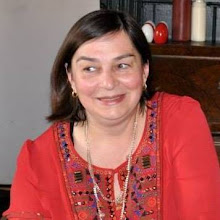
Sales of the short collection we published for the winner (An Apple Tree Spouts Philosophy) are still adding to that figure, and the competition also helped launch the winner Caroline Squire as a poet who deserved to have a book out and to be noticed.
I was immediately approached by agencies wanting to manage this competition and publication for us, which draws attention to the fact that there’s money to be made from such ventures. Of course I didn’t accept these offers. None of the organisers of this competition take a penny in income, so there would be no commission for an agency.
The idea for the competition came from Ruth O’Callaghan, the poet who runs the twice-monthly Lumen and Camden Poetry Series of events, combining poetry performance by published poets with open mic from the audience and the chance to submit to her annual charity anthology. These events and anthology add about £4,000 more to the total raised for the homeless.
All of this raises a high percentage of the money needed to keep the Cold Weather Shelters going – the last time I heard it was 60% and I’m sure it’s still growing. So it’s a good thing when publishers support charities, isn’t it? Or are there mistakes that can be made?
An article in The Big Issue this week reminded me of the risks, and I’m more than aware of them already. In the article readers were warned about online sellers offering Christmas cards to support charities. Even the reputable shops selling greetings cards for charities typically give only 20-25% to the cause, perhaps less. At the most, a good retailer like WH Smith, might give 70%.
This is often used purely as a way of boosting sales, and a number of the online sellers pay a minimal 1% to the charities. So, supporting a charity can be part of a marketing drive, rather than a genuine effort to help.
As publishers, authors, and book buyers we need to be aware of this, and as competition entrants too. When we see that a competition, an anthology asking for submissions, or any book is being sold in aid of a charity, we need to know how much of the income is actually going to be handed over.
As a publisher I’m very aware that I could get this wrong, and the only way I can see of doing it is if we take absolutely nothing for Ward Wood Publishing and give all proceeds to the charity. Carol Ann Duffy takes no fee for judging the competition, and Ruth O’Callaghan also works with me at organising the entries and passing them on. Taking no income from charity work does simplify matters.
I do understand why publishers sometimes take a commission for this work and I don’t blame them for it. The work involved in organising and promoting the competition was pretty heavy. I was worn out by the time the deadline arrived. If you don’t keep promoting a competition you risk getting too few entries and we wanted to raise as much as possible for the charity.
The entries had to be accepted, entrants advised that their entry had been received if they paid and submitted via the website, and all entries passed to Ruth O’Callaghan who then organised it for Carol Ann Duffy. The number of entries as the deadline approached meant I was dealing with a huge amount of email.
But I’m not sure a commission based on a percentage of fees or sales is the right way to respond to this kind of workload. Generally, when publishers produce anthologies for charities, they might charge a 30% admin fee. I’m not sure how much agencies charge to organise this for a publisher. When we were organising the competition last year people told me I should be taking this fee.
I wouldn’t have felt happy about taking £600 from the £2,000 we raised, because I don’t think people entering a charity competition would be expecting that, so I didn’t want to take the standard 30% admin fee. People want their entry fees to go to the charity. I think people would accept specific costs being taken from the entry fee, such as printing and postage. We did calculate just over £100 for this as these are unavoidable costs and we arranged as low a fee with the printer as we could.
It’s better to detail these costs and explain clearly how much is to be taken out of the proceeds. A 30% admin fee could be very little, or it could be way too much in the case of a successful competition like ours. It wouldn’t cover the hours we have to spend working on it, but I’m not comfortable taking an income from any charity project.
Of course, this means we can’t do too many. We can probably only do one or two because the work has to be completely voluntary. But, in my opinion, this is the only way to go. People may disagree with me. It might be that it’s seen to be a good idea for publishers to make income from taking a percentage from charity publications, and agencies may also be welcome.
Charity anthologies do offer all the writers submitting a chance to get into print. They can supply some income for the publisher – perhaps a reasonable amount to cover the hours spent working. And they support the charities.
All opinions would be welcome on this subject. I’ve been careful about it since my first collection was accepted in the 1980s and I wanted to support the homeless in a Kilburn soup kitchen and hostel with a percentage of the sales income. The publisher advised me not to, as he said too many people did it and it could look like a marketing ploy to increase my sales.
Showing posts with label Books. Show all posts
Showing posts with label Books. Show all posts
Sunday, 4 December 2011


Friday, 2 December 2011
Occupy Books: A Naughty Suggestion
There’s a simple solution that can help us fight the way we’re going to have heavily marketed books thrust in our faces in bookshops and supermarkets all through the gift-giving season. It’s a bit naughty but could be a fun idea for the weekend. It’s the book-lover's silent but effective protest.
What you do is this. You go into the bookshop, careful not to look with distaste at the piles of books in prominent positions on the display tables. Just saunter along as you would usually and browse along a few shelves, picking out books at random and putting them back.
Then find a book you really admire and spend a little time with it. Wander along and select another. As you dilly dally along with your books, with that ‘Shall I buy?’ look on your face, choose an opportune moment and stick your favourite book on top of one of the piles on the best display table.
This works very well for novels and nonfiction. You might even want to put a cookbook with tasty recipes on top of Jamie Oliver’s barely edible inventions. Poetry is a bit more tricky.
If you can find the poetry books you like – in fact if you can find the poetry section at all (it will be very small and tucked away in a back corner or downstairs) you probably can’t get away with moving a book to the prime positions in the shop.
What you can do is take out the book you like best, read the blurb innocently, and put it back leaning against the others with its cover showing instead of spine only. It will look so nice like that. If you’re feeling very naughty you might find they have some special little stands tucked among the poetry books to display the usual suspects well and you can trump them with your selection.
Of course, you’re likely to find that the poetry collections you would most like to see displayed aren’t in the shop at all. Bookshops rarely take poetry, they dedicate a tiny set of shelves to it, and they’re unlikely even to take a good book sale or return. The shelves are crammed too tight already so they want to offload poetry whenever possible.
The only naughty answer to this is to follow the instructions in the Ann Drysdale poem ‘Between Dryden and Duffy’. Do Google it for the best methods – it’s one of the funniest comedy sonnets I’ve seen.
The poet in the poem looks along the shelf for her book, and when she doesn’t find it she clears that space between Dryden and Duffy and inserts one from her supermarket carrier bag. Of course, not all poet’s names fall into such a great position by happy accident.
So there are ways to get real books displayed. The prime display positions in the bookshops have been marked out and are all nicely prepared waiting for your choices. Something naughty to do at the weekend? I’m not going to admit if I’m already doing it.
What you do is this. You go into the bookshop, careful not to look with distaste at the piles of books in prominent positions on the display tables. Just saunter along as you would usually and browse along a few shelves, picking out books at random and putting them back.
Then find a book you really admire and spend a little time with it. Wander along and select another. As you dilly dally along with your books, with that ‘Shall I buy?’ look on your face, choose an opportune moment and stick your favourite book on top of one of the piles on the best display table.
This works very well for novels and nonfiction. You might even want to put a cookbook with tasty recipes on top of Jamie Oliver’s barely edible inventions. Poetry is a bit more tricky.
If you can find the poetry books you like – in fact if you can find the poetry section at all (it will be very small and tucked away in a back corner or downstairs) you probably can’t get away with moving a book to the prime positions in the shop.
What you can do is take out the book you like best, read the blurb innocently, and put it back leaning against the others with its cover showing instead of spine only. It will look so nice like that. If you’re feeling very naughty you might find they have some special little stands tucked among the poetry books to display the usual suspects well and you can trump them with your selection.
Of course, you’re likely to find that the poetry collections you would most like to see displayed aren’t in the shop at all. Bookshops rarely take poetry, they dedicate a tiny set of shelves to it, and they’re unlikely even to take a good book sale or return. The shelves are crammed too tight already so they want to offload poetry whenever possible.
The only naughty answer to this is to follow the instructions in the Ann Drysdale poem ‘Between Dryden and Duffy’. Do Google it for the best methods – it’s one of the funniest comedy sonnets I’ve seen.
The poet in the poem looks along the shelf for her book, and when she doesn’t find it she clears that space between Dryden and Duffy and inserts one from her supermarket carrier bag. Of course, not all poet’s names fall into such a great position by happy accident.
So there are ways to get real books displayed. The prime display positions in the bookshops have been marked out and are all nicely prepared waiting for your choices. Something naughty to do at the weekend? I’m not going to admit if I’m already doing it.
Thursday, 1 December 2011
Occupy Books. Celebrity Authors or Real Books?
OK, I know some celebrity authors can write and some of their books are good. But after yesterday’s post people complained at the way the market this season is dominated by highly publicised books that will probably never be read – not even by the ‘authors’ as so many are ghostwritten. These books are just bought as easy and lazy gifts at the last minute. I thought I’d add some statistics to this about how publishing and bookselling trends affect authors and what we can do about it.
I admit these statistics were gleaned from the One Show (a popular evening chat show on BBC One, if you’re not familiar with UK television). This made it more comical for me, because Gyles Brandreth revealed some figures about aspiring authors, rejection figures, and who gets published and paid for books. He did all of this with celebrity author Celia Imrie beside him, just about to plug her book.
Gyles answered the question many people ask me – which is ‘How many people can actually make a living out of writing books?’ I’ve always made my living out of writing as a journalist and nonfiction book author, as well as working in publishing as an editor and now a publisher. But they mean books of fiction or poetry.
He revealed that 95% of books submitted to publishers are rejected. Of the 5% that get accepted, 75% of the authors will earn less than £20,000 per year for their book (and most books only sell well in the first year). £20,000 might still sound reasonable, but really the vast majority of these authors will be doing well if they sell between 1,000-3,000 books per year. That’s the usual figure, and I’ve heard that even with a major publisher, the debut novel can be expected to sell about 500 copies.
So, about 5% of authors who submit to publishers will be accepted, and they are most likely going to sell fewer than 3,000 books. Even if they get royalties of 10% of the cover price and the book sells for £10, this would be less than £3,000 income. But most contracts with major publishers aren’t based on 10% of the cover price. All costs are taken off first and you get a percentage of the profit.
A while ago I posted about literary agents and the kind of advance they told me they go for. The agent I spoke to is very good and aims for a £25,000 advance for authors as her income comes purely from a percentage of what the author is paid by the publisher, if she succeeds in getting authors signed. This is standard – if you get an agent they manage your income by receiving it from the publisher, taking off their commission, and paying you.
But usually an advance is £5,000 or less. The book sales have to pay back the advance to the publisher before any additional income is paid, and you can see by the average sales figures that this is quite hard to achieve.
Gyles finished off by saying what happens to so many of the books that are published but don’t sell in large enough quantities. They are used in the construction of motorways and he said how many miles they were supporting, but sadly I can’t remember. Apparently they form a good, shock absorbent type of support.
I do hear people saying they think much of this is new, but I first worked as a fiction reviewer and an editor in the early 1980s and I was told even then about the massive quantities of books that were published only to be pulped. Authors are just becoming more aware of the facts nowadays, probably due to more information being available online.
At the end of his commentary, Gyles pointed out that publishers were more likely to take on authors who were already celebrities. They’re easier to sell. It was quite a comical introduction to Celia Imrie talking about her new book and her mouth was in a very uncomfortable attempt at a polite smile. I must confess, I've read some of her book and she's very good.
I’m not against celebrity authors, because publishers and bookshops say they provide enough finance for a lot of their other work. Celebrity authors could help support the publishing of less commercial books, and could also help publishers take a risk on authors.
Bookshops do have limits due to shelf space – a problem I’ve only realised to be significant over the past year. They can’t just take a risk on a book that’s good even if it’s sale or return. They always want sale or return, and they don’t have space.
The figures shouldn’t be depressing. When rejection slips come in, they need to be cast aside quickly and not be offputting. It’s hard to get published, and it’s even harder for those published books to sell in order to stay on a publisher’s list. We all keep writing anyway.
We shouldn’t see publishers as the judges of whether or not our writing is good, but we often do. We certainly shouldn’t judge by how much our book sells either, or all poets would stop writing.
All of this does mean that independent publishers and truly independent bookshops need to be supported if we want publishing outlets for debut novelists, poets, and risk-taking authors. The only way this can happen is if they’re supported by buyers.
Major publishers poach safe bet authors from each other – or so the literary agent told me – and they also poach from independent publishers. To keep opportunities open for authors I suggest looking at the good independent publishers and bookshops this season.
Sorry to repeat this bit, but I’m not saying this to promote my company or any specific company. In fact suggestions for good listings of independents and good review sites would be welcome.
I admit these statistics were gleaned from the One Show (a popular evening chat show on BBC One, if you’re not familiar with UK television). This made it more comical for me, because Gyles Brandreth revealed some figures about aspiring authors, rejection figures, and who gets published and paid for books. He did all of this with celebrity author Celia Imrie beside him, just about to plug her book.
Gyles answered the question many people ask me – which is ‘How many people can actually make a living out of writing books?’ I’ve always made my living out of writing as a journalist and nonfiction book author, as well as working in publishing as an editor and now a publisher. But they mean books of fiction or poetry.
He revealed that 95% of books submitted to publishers are rejected. Of the 5% that get accepted, 75% of the authors will earn less than £20,000 per year for their book (and most books only sell well in the first year). £20,000 might still sound reasonable, but really the vast majority of these authors will be doing well if they sell between 1,000-3,000 books per year. That’s the usual figure, and I’ve heard that even with a major publisher, the debut novel can be expected to sell about 500 copies.
So, about 5% of authors who submit to publishers will be accepted, and they are most likely going to sell fewer than 3,000 books. Even if they get royalties of 10% of the cover price and the book sells for £10, this would be less than £3,000 income. But most contracts with major publishers aren’t based on 10% of the cover price. All costs are taken off first and you get a percentage of the profit.
A while ago I posted about literary agents and the kind of advance they told me they go for. The agent I spoke to is very good and aims for a £25,000 advance for authors as her income comes purely from a percentage of what the author is paid by the publisher, if she succeeds in getting authors signed. This is standard – if you get an agent they manage your income by receiving it from the publisher, taking off their commission, and paying you.
But usually an advance is £5,000 or less. The book sales have to pay back the advance to the publisher before any additional income is paid, and you can see by the average sales figures that this is quite hard to achieve.
Gyles finished off by saying what happens to so many of the books that are published but don’t sell in large enough quantities. They are used in the construction of motorways and he said how many miles they were supporting, but sadly I can’t remember. Apparently they form a good, shock absorbent type of support.
I do hear people saying they think much of this is new, but I first worked as a fiction reviewer and an editor in the early 1980s and I was told even then about the massive quantities of books that were published only to be pulped. Authors are just becoming more aware of the facts nowadays, probably due to more information being available online.
At the end of his commentary, Gyles pointed out that publishers were more likely to take on authors who were already celebrities. They’re easier to sell. It was quite a comical introduction to Celia Imrie talking about her new book and her mouth was in a very uncomfortable attempt at a polite smile. I must confess, I've read some of her book and she's very good.
I’m not against celebrity authors, because publishers and bookshops say they provide enough finance for a lot of their other work. Celebrity authors could help support the publishing of less commercial books, and could also help publishers take a risk on authors.
Bookshops do have limits due to shelf space – a problem I’ve only realised to be significant over the past year. They can’t just take a risk on a book that’s good even if it’s sale or return. They always want sale or return, and they don’t have space.
The figures shouldn’t be depressing. When rejection slips come in, they need to be cast aside quickly and not be offputting. It’s hard to get published, and it’s even harder for those published books to sell in order to stay on a publisher’s list. We all keep writing anyway.
We shouldn’t see publishers as the judges of whether or not our writing is good, but we often do. We certainly shouldn’t judge by how much our book sells either, or all poets would stop writing.
All of this does mean that independent publishers and truly independent bookshops need to be supported if we want publishing outlets for debut novelists, poets, and risk-taking authors. The only way this can happen is if they’re supported by buyers.
Major publishers poach safe bet authors from each other – or so the literary agent told me – and they also poach from independent publishers. To keep opportunities open for authors I suggest looking at the good independent publishers and bookshops this season.
Sorry to repeat this bit, but I’m not saying this to promote my company or any specific company. In fact suggestions for good listings of independents and good review sites would be welcome.
Wednesday, 30 November 2011
Occupy Books. Do We Want Our Books on Prescription?
This week I found out that a high street bookseller who always stocks our latest books can’t take any books released by us this season. They want to stock the books and have asked me to come back after Christmas, when they will be able to stock them.
This was a bit of a shock, because of course this is one of them main times of the year when people will be looking for books as gifts. The manager liked our books – she wanted our books – but she told me that at the moment ‘It’s all prescribed’.
I looked into this and found out that major publishers pay to have their books stocked at Christmas, and the evasive word for this is that the books have been ‘prescribed’. Even publishers who normally get their books stocked will be turned at the door until this favourable time for bookselling has passed.
So, if you go into the main bookshops for your gifts, you’ll be getting them on prescription. The major publishers have paid to have certain books not only thrust in your face, but also to have other books kept out of stock until January.
We all know this happens to a certain extent all year – that the books on the best display tables have been paid for, and that the others only have their spines showing on shelves.
But I didn’t realise books that the shop managers would like to stock are turned away completely over Christmas because they haven’t been ‘prescribed’ with a hefty payment from the publisher.
This doesn’t just include books from smaller presses. It includes books in the mid-list from major publishers. The publishers decide which books we should be offered based on what they think can sell in large numbers, and they publicise those books in a number of ways to make sure people want them.
We know which books those are. Their celebrity authors have been appearing on TV chat shows recently. No doubt there will also be some good novels, but what there won’t be is a good range of choice and books stocked according to what the bookshop manager and buyers select on merit.
It’s always hard for me to get poetry books into these main bookshops, but they will support local poets so long as we have all our books in their centralised system, and we do. They do support all of our novels by stocking them, and also the Bedford Square 5 anthology. Just not while the books are stocked on prescription.
I’m not saying this in order to say ‘Buy my book’ or ‘Buy from my publishing company’ and I wouldn’t want Occupy Books to be a protest that’s exploited purely for marketing.
The only way to show how we feel about what one person called ‘corruption in publishing and bookselling’ when he explained prescription to me, is not to support the shops doing this and to look for books in a different way.
If you want to answer this post with suggestions, please don’t point to your own publishing company or book. Perhaps show good review sites about books from independent presses. Perhaps take a look on the websites of a number of independent publishing companies and buy direct from the publisher.
Or contact some of your favourite authors on Facebook and ask to buy signed copies direct from them. We can also ‘buy local’ and ‘buy direct’ for our books, if we don’t want them on prescription.
This was a bit of a shock, because of course this is one of them main times of the year when people will be looking for books as gifts. The manager liked our books – she wanted our books – but she told me that at the moment ‘It’s all prescribed’.
I looked into this and found out that major publishers pay to have their books stocked at Christmas, and the evasive word for this is that the books have been ‘prescribed’. Even publishers who normally get their books stocked will be turned at the door until this favourable time for bookselling has passed.
So, if you go into the main bookshops for your gifts, you’ll be getting them on prescription. The major publishers have paid to have certain books not only thrust in your face, but also to have other books kept out of stock until January.
We all know this happens to a certain extent all year – that the books on the best display tables have been paid for, and that the others only have their spines showing on shelves.
But I didn’t realise books that the shop managers would like to stock are turned away completely over Christmas because they haven’t been ‘prescribed’ with a hefty payment from the publisher.
This doesn’t just include books from smaller presses. It includes books in the mid-list from major publishers. The publishers decide which books we should be offered based on what they think can sell in large numbers, and they publicise those books in a number of ways to make sure people want them.
We know which books those are. Their celebrity authors have been appearing on TV chat shows recently. No doubt there will also be some good novels, but what there won’t be is a good range of choice and books stocked according to what the bookshop manager and buyers select on merit.
It’s always hard for me to get poetry books into these main bookshops, but they will support local poets so long as we have all our books in their centralised system, and we do. They do support all of our novels by stocking them, and also the Bedford Square 5 anthology. Just not while the books are stocked on prescription.
I’m not saying this in order to say ‘Buy my book’ or ‘Buy from my publishing company’ and I wouldn’t want Occupy Books to be a protest that’s exploited purely for marketing.
The only way to show how we feel about what one person called ‘corruption in publishing and bookselling’ when he explained prescription to me, is not to support the shops doing this and to look for books in a different way.
If you want to answer this post with suggestions, please don’t point to your own publishing company or book. Perhaps show good review sites about books from independent presses. Perhaps take a look on the websites of a number of independent publishing companies and buy direct from the publisher.
Or contact some of your favourite authors on Facebook and ask to buy signed copies direct from them. We can also ‘buy local’ and ‘buy direct’ for our books, if we don’t want them on prescription.
Subscribe to:
Posts (Atom)



 Posts
Posts